
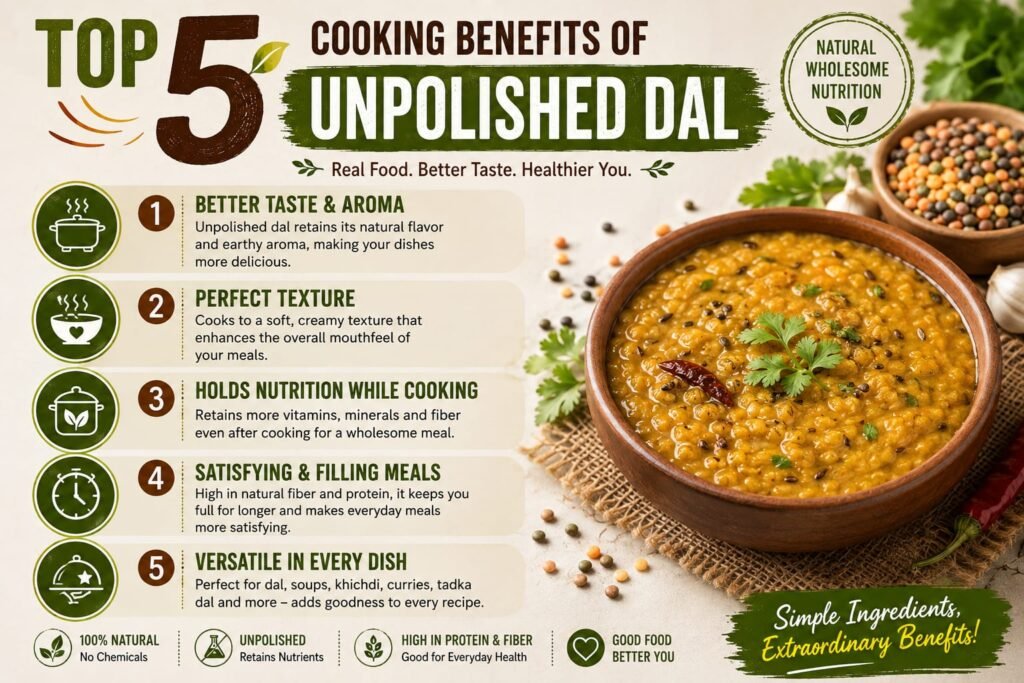
1. Natural Taste and Authentic Flavour
One of the biggest Cooking Benefits Of Unpolished Dal is its natural taste. Dal is an important ingredient, and its flavour plays a major role in the quality of the final dish.
When preparing traditional recipes, people often want the natural flavour of the pulse to stand out. Unpolished dal can provide a wholesome and authentic taste that works beautifully with everyday Indian cooking.
For example, a simple bowl of toor dal prepared with turmeric, cumin, garlic, and a traditional tadka can become the highlight of a meal. Similarly, moong dal khichdi can offer a comforting and mild flavour when prepared with good-quality ingredients.
Best Dishes to Prepare
Unpolished dal can be used for:
- Traditional Dal Tadka
- Toor Dal Amti
- Moong Dal Khichdi
- Chana Dal Curry
- Urad Dal Preparations
- Dal Fry
- Healthy Soups
- Mixed Dal Recipes
The natural flavour of the dal can combine beautifully with Indian spices and ingredients.
Why Natural Taste Matters
A good meal does not always require excessive spices or complicated ingredients. When the main ingredient has a pleasant and natural taste, even a simple recipe can become delicious.
That is why choosing quality dal can make a noticeable difference in everyday cooking.
2. Excellent Texture for Traditional Recipes
The second important benefit is texture. Texture plays a major role in how a dal dish looks and feels after cooking.
Different dishes require different textures. Some recipes need soft and smooth dal, while others require the grains to maintain more structure.
One of the useful Cooking Benefits Of Unpolished Dal is that it can provide a satisfying and natural texture when properly selected, washed, soaked when required, and cooked correctly.
For example:
Toor Dal
Toor dal is commonly used to prepare everyday dal, sambhar, amti, and dal fry. When cooked properly, it develops a smooth and comforting consistency.
Moong Dal
Moong dal is versatile and can be used for khichdi, soups, cheela, and traditional sweet dishes. It cooks into a soft and comforting texture.
Chana Dal
Chana dal has a slightly firmer texture and is excellent for curries, snacks, sweets, and traditional recipes such as dal vada.
Urad Dal
Urad dal is widely used in South Indian cooking and can be used in preparations such as dosa and idli batter, as well as several other dishes.
The right texture can improve the overall eating experience and help your recipes achieve the desired consistency.
3. Versatility for Everyday Cooking
Another major advantage of unpolished dal is its versatility.
Dal is one of the most flexible ingredients in an Indian kitchen. A single variety can be transformed into multiple dishes by changing the spices, vegetables, cooking method, or consistency.
This is one of the most practical Cooking Benefits Of Unpolished Dal for families who want variety in their daily meals.
Ways to Use Unpolished Dal You can prepare:
Simple Dal
Cook the dal with turmeric and salt, then add a traditional tadka using cumin, garlic, curry leaves, or other preferred ingredients.
Dal Khichdi
Combine rice and moong dal with vegetables and mild spices to create a comforting one-pot meal.
Dal Soup
Blend cooked dal with vegetables and seasonings for a warm and wholesome soup.
Dal Curry
Prepare a thicker curry with tomatoes, onions, and your preferred spices.
Mixed Dal
Combine different varieties such as toor, moong, chana, and urad dal to create a flavourful mixed dal recipe.
Because of this versatility, unpolished dal can easily become a regular ingredient in your weekly meal planning.
4. Supports Wholesome and Traditional Home Cooking
Modern life can be busy, but many families still enjoy preparing traditional home-cooked meals.
Using simple ingredients such as dal, vegetables, rice, roti, and natural spices can help create satisfying everyday meals.
One of the important Cooking Benefits Of Unpolished Dal is its suitability for traditional and wholesome cooking styles.
Indian cuisine has a rich variety of dal-based recipes. From Maharashtrian amti to Punjabi dal fry, Gujarati dal, South Indian sambhar, and Bengali-style lentil dishes, dal is deeply connected with Indian food culture.
Traditional Cooking Ideas
Here are a few delicious ways to use unpolished dal:
Toor Dal Amti:
Prepare cooked toor dal with spices, tamarind, jaggery, and a traditional tempering.
Moong Dal Khichdi:
A simple combination of rice and moong dal cooked with mild spices and vegetables.
Chana Dal Curry:
Prepare chana dal with onions, tomatoes, ginger, garlic, and aromatic spices.
Dal Tadka:
Cook the dal until soft and finish with a flavourful tempering.
Mixed Dal:
Combine multiple dals to create a rich and satisfying dish with different flavours and textures.
Using quality ingredients can help preserve the authentic character of these traditional recipes.
5. Attractive Natural Appearance in Cooked Meals
Although polished dal may appear bright before cooking, many people today prefer ingredients with a more natural appearance.
Unpolished dal generally has its own natural colour and character. Once cooked, it can become part of a visually appealing and delicious meal.
This is another useful aspect of the Cooking Benefits Of Unpolished Dal.
The final appearance of your dish depends on many factors, including:
- Quality of the dal
- Freshness
- Proper washing
- Correct cooking time
- Amount of water
- Spices and ingredients used
- Cooking method
For example, golden toor dal, yellow moong dal, and warm-coloured chana dal can create visually attractive dishes when combined with fresh vegetables and traditional Indian spices.
A well-prepared dal dish can look appetising while also delivering comforting flavour and texture.
How to Cook Unpolished Dal Properly
To get the best results, it is important to follow proper cooking methods.
Step 1: Sort the Dal
Before washing, check the dal and remove any unwanted particles if present.
Step 2: Wash Thoroughly
Rinse the dal with clean water two or three times, or as needed, until it is properly cleaned.
Step 3: Soak When Required
Some dals may benefit from soaking before cooking. Soaking time can vary depending on the variety and recipe.
For example, chana dal may require longer soaking compared with moong dal.
Step 4: Use the Right Amount of Water
The amount of water affects the final consistency. Use more water for a thinner dal and less water for thicker recipes.
Step 5: Cook Until Properly Soft
Cooking time depends on the variety, freshness, soaking, and cooking method. A pressure cooker or other suitable cooking method can be used according to the recipe.
Step 6: Add Flavour with a Tadka
A traditional tempering can transform a simple dal into a delicious dish.
Popular ingredients for tadka include:
- Cumin seeds
- Mustard seeds
- Garlic
- Curry leaves
- Hing
- Green chillies
- Red chillies
- Turmeric
- Ghee or cooking oil
These ingredients can enhance the aroma and overall flavour of the dish.
Tips for Getting the Best Results from Unpolished Dal
Here are some useful cooking tips:
1. Buy Fresh Dal
Freshness can influence cooking time and overall quality.
2. Store Properly
Keep dal in a clean, dry, airtight container to protect it from moisture.
3. Use Clean Water
Always wash and cook dal using clean water.
4. Avoid Overcooking
Overcooking can change the texture of some recipes. Cook according to the desired consistency.
5. Experiment with Recipes
Try different combinations of dals, vegetables, herbs, and spices.
These simple practices can help you enjoy the full Cooking Benefits Of Unpolished Dal.
Why Unpolished Dal Is a Great Choice for Your Kitchen
Unpolished dal is suitable for people who enjoy natural-looking ingredients and traditional home cooking.
It can be used in a wide range of recipes, from simple everyday meals to special dishes prepared for family and guests.
The five major cooking advantages discussed in this article are:
- Natural taste and authentic flavour
- Contact with us