
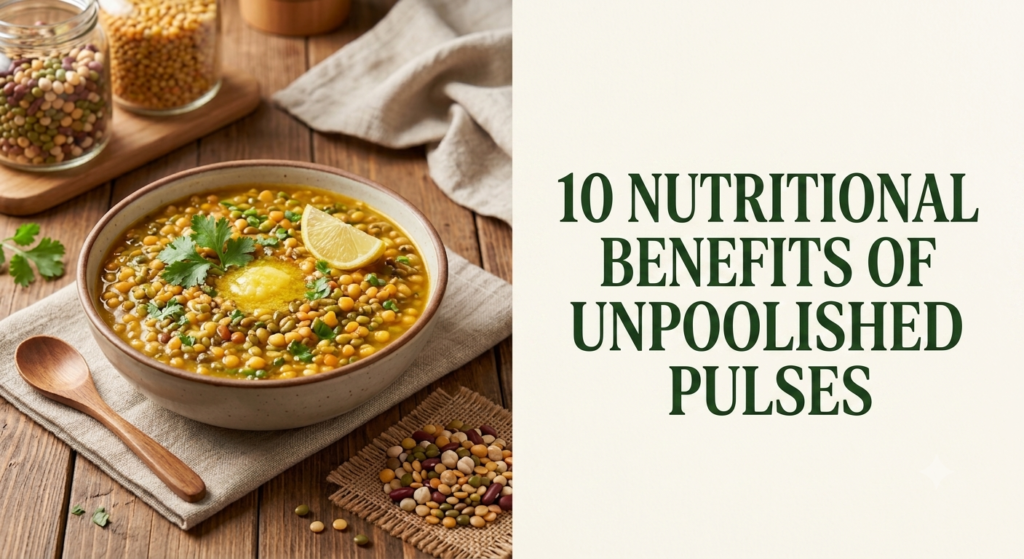
1. A Valuable Source of Plant-Based Protein Unpolished Pulses
One of the biggest Nutritional Benefits Of Pure Unpolished Pulses is their contribution to dietary protein.
Protein is an essential nutrient needed by the body for many important functions, including the maintenance and repair of body tissues.
Pulses are an important source of plant-based protein and are especially valuable in vegetarian and plant-focused diets.
Different pulses provide different amounts of protein. Toor dal, moong dal, chana dal, urad dal, and masoor dal can all contribute to daily protein intake as part of a varied diet.
Easy Ways to Include Pulses
You can enjoy pulses through:
- Dal
- Khichdi
- Mixed dal
- Soups
- Chana dal curry
- Moong cheela
- Traditional snacks
Combining pulses with cereals such as rice or wheat can also contribute to a varied and balanced dietary pattern.
2. Naturally Rich in Dietary Fibre
Dietary fibre is another important nutritional component found in pulses.
Fibre is an essential part of a balanced diet and is commonly associated with healthy digestion and regular bowel function.
Including fibre-rich foods such as pulses, vegetables, fruits, and whole grains can help create a more balanced eating pattern.
Popular pulse-based dishes that can contribute dietary fibre include:
- Mixed dal
- Chana preparations
- Moong dishes
- Whole pulse curries
- Dal soups
The exact fibre content depends on the type of pulse and the level of processing.
3. Provides Important Vitamins and Minerals
Pulses can provide a variety of essential vitamins and minerals.
Depending on the type, pulses may contribute nutrients such as:
- Iron
- Folate
- Potassium
- Magnesium
- Phosphorus
- Zinc
- B vitamins
These nutrients play different roles in normal body functions.
For example, iron is involved in several important processes in the body, while folate is an essential nutrient required for normal cell functions.
A balanced diet should include a variety of nutrient-rich foods rather than relying on a single ingredient.
That is why including different types of pulses can be a useful way to improve dietary variety.
4. Supports a Balanced and Filling Meal
Pulses contain a combination of protein, carbohydrates, and dietary fibre.
This combination can make pulse-based meals satisfying and suitable for everyday eating.
For example, a simple meal of:
Dal + Rice + Vegetables + Salad
can provide a combination of carbohydrates, protein, fibre, and other nutrients.
Similarly:
Roti + Chana Dal + Seasonal Vegetables
can form part of a balanced traditional meal.
One of the practical Nutritional Benefits Of Pure Unpolished Pulses is that they can easily fit into different meal patterns.
5. Naturally Low in Saturated Fat Unpolished Pulses
Most pulses are naturally low in fat and contain very little saturated fat in their natural form.
This makes them a useful component of meals for people who want to focus on a balanced eating pattern.
However, the final nutritional value of a pulse dish depends on how it is prepared.
For example, adding large quantities of ghee, butter, cream, or oil can significantly change the calorie and fat content of the final dish.
For everyday meals, cooking pulses with appropriate amounts of oil and combining them with vegetables and whole grains can help create a balanced plate.
6. A Versatile Source of Complex Carbohydrates
Pulses naturally contain carbohydrates that provide energy.
Unlike highly refined carbohydrate foods, pulses also provide other nutrients, including protein and fibre.
This combination makes pulses an important part of many balanced diets.
Some delicious ways to enjoy pulse-based meals include:
- Moong dal khichdi
- Toor dal with rice
- Chana dal with roti
- Mixed dal with vegetables
- Dal soup
The versatility of pulses makes it easy to include them in breakfast, lunch, dinner, and snacks.
7. May Support Better Digestive Health
Because pulses can provide dietary fibre, they can contribute to a diet that supports normal digestive function.
Fibre works best as part of an overall dietary pattern that includes adequate fluids and a variety of plant-based foods.
If you are not used to eating large amounts of pulses or fibre-rich foods, increasing intake gradually may be more comfortable for some people.
Cooking pulses properly can also improve their texture and make them easier to include in everyday meals.
Useful preparation methods include:
- Washing properly
- Soaking suitable pulses
- Cooking until adequately soft
- Using appropriate portions
Adding different pulses gradually to your diet can help create variety.
8. Helps Add Variety to Everyday Meals
One of the practical Nutritional Benefits Of Pure Unpolished Pulses is the variety they bring to the diet.
Instead of eating the same dal every day, families can rotate different varieties.
For example:
Monday – Toor Dal
A classic choice for dal, amti, and sambhar.
Tuesday – Moong Dal
Ideal for khichdi, soup, or a light dal preparation.
Wednesday – Chana Dal
Suitable for curries, snacks, and traditional recipes.
Thursday – Urad Dal
Can be used in different preparations and traditional dishes.
Friday – Masoor Dal
A flavourful option for everyday cooking.
Rotating different pulses can make meals more interesting and help provide a broader range of nutrients.
9. An Affordable and Sustainable Plant Food
Pulses have long been an important food source because they are versatile, widely available, and can be stored for relatively long periods when kept properly.
They are also an important source of plant-based nutrition for many households.
Pulses can be used to prepare simple meals without requiring expensive ingredients.
For example, a nutritious home-cooked meal can include:
- Dal
- Rice or roti
- Seasonal vegetables
- Salad
This makes pulses a practical ingredient for families looking to prepare balanced meals at home.
From a food-system perspective, pulses are also important crops in many agricultural regions and are valued for their role in diversified farming systems.
10. Easy to Include in Indian Recipes
The final benefit is their incredible versatility in Indian cooking.
Pure unpolished pulses can be used in numerous dishes.
Toor Dal Recipes
- Dal Tadka
- Amti
- Sambar
- Simple everyday dal
Moong Dal Recipes
- Khichdi
- Moong Dal Soup
- Cheela
- Dal Fry
Chana Dal Recipes
- Chana Dal Curry
- Dal Vada
- Traditional sweets
- Snacks
Urad Dal Recipes
- Traditional dal dishes
- Dosa batter
- Idli batter
- Mixed dal recipes
Because there are so many preparation methods, pulses can easily become a regular part of a varied diet.
Pure Unpolished Pulses and Everyday Indian Meals
Indian cuisine naturally provides many opportunities to include pulses in daily meals.
A balanced meal can combine:
- Pulses
- Vegetables
- Whole grains
- Fruits
- Appropriate amounts of healthy fats
- Other suitable protein sources
For example:
Simple Lunch Plate
- Unpolished Toor Dal
- Rice or roti
- Seasonal vegetable
- Fresh salad
Light Dinner
- Moong Dal Khichdi
- Vegetable preparation
- Curd, if suitable for your diet
Traditional Meal
- Chana Dal
- Roti
- Seasonal sabzi
- Salad
These combinations provide variety and make everyday meals enjoyable.
How to Cook Pure Unpolished Pulses Properly
Proper preparation is important for good taste and texture.
Step 1: Check the Unpolished Pulses
Before cooking, inspect the pulses and remove any unwanted particles if present.
Step 2: Wash Thoroughly
Wash the pulses with clean water before cooking.
Step 3: Soak When Required
Some pulses may benefit from soaking before cooking. The soaking time depends on the variety and recipe.
Step 4: Cook Until Soft
Cooking time can depend on:
- Pulse variety
- Freshness
- Age
- Soaking
- Cooking method
Cook until the desired texture is achieved.
Step 5: Add Flavour Naturally
Use ingredients such as:
- Turmeric
- Cumin
- Garlic
- Ginger
- Curry leaves
- Tomatoes
- Onions
- Traditional Indian spices
A simple tadka can transform cooked dal into a delicious meal.
How to Choose Quality Pure Unpolished Pulses
When purchasing pulses, consider the following factors.
1. Check the Packaging
Choose properly sealed packaging that protects the product from moisture and contamination.
2. Check Product Information
Look for information such as:
- Type of pulse
- Manufacturing date
- Best-before date
- Storage instructions
3. Consider Freshness
Fresh pulses generally provide a better cooking experience.
Very old pulses may take longer to cook.
4. Store Properly
Store pulses in a:
- Clean container
- Dry location
- Airtight container
Keep them away from moisture and excessive heat.