
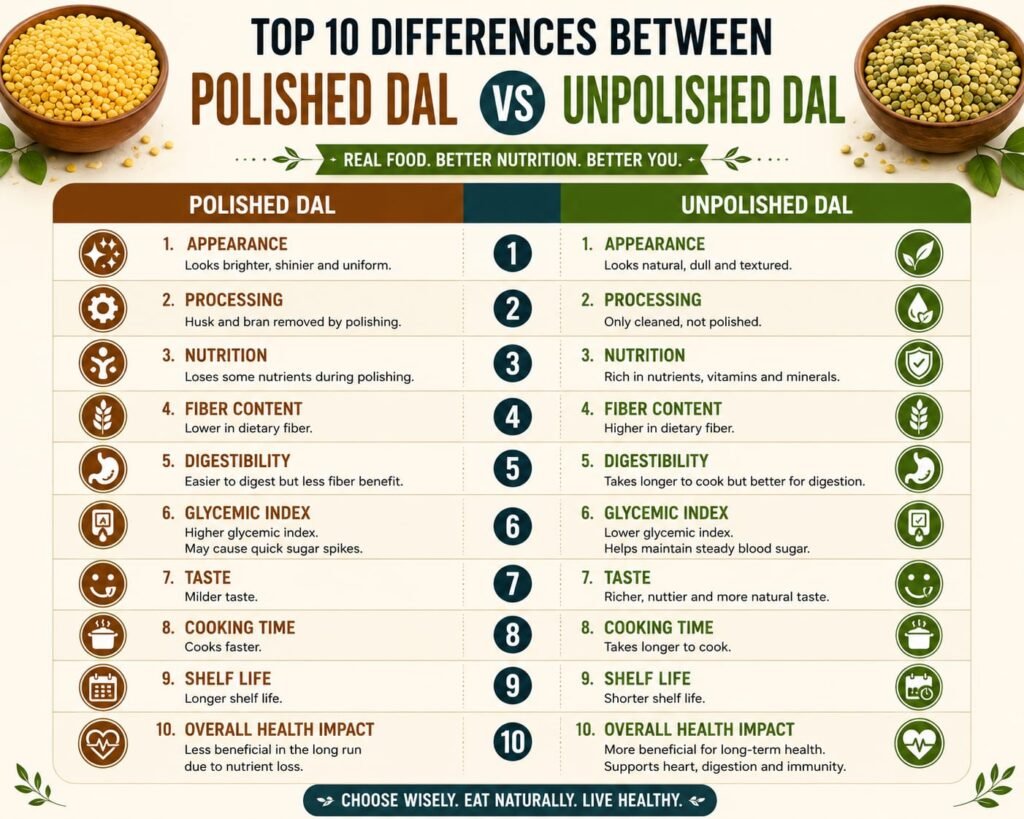
Polished And Unpolished
What Is Polished Dal?
Polished dal refers to dal that has undergone an additional processing step intended to improve its visual appearance.
The purpose of polishing can vary depending on the processing method. It may help create a brighter, smoother, or more uniform-looking surface.
Polished dal is often chosen because:
- It may have a brighter appearance.
- The grains can look smoother.
- The colour may appear more uniform.
- Consumers may find its appearance visually attractive.
The exact characteristics can vary depending on the type of dal and the processing method used.
What Is Unpolished Dal?
Unpolished dal refers to dal that does not undergo an additional polishing process intended to create a glossy appearance.
It generally retains a more natural-looking surface and colour variation.
Unpolished dal may appeal to consumers who prefer:
- A natural appearance
- Less emphasis on surface shine
- Traditional-style food processing
- Authentic-looking ingredients
Different varieties of unpolished dal can include:
- Unpolished Toor Dal
- Unpolished Moong Dal
- Unpolished Chana Dal
- Unpolished Urad Dal
- Unpolished Masoor Dal
Now, let’s look at the major Differences Between Polished And Unpolished Dal.
1. Appearance : Polished And Unpolished
The most noticeable difference between polished and unpolished dal is appearance.
Polished Dal
Polished dal may appear:
- Brighter
- Smoother
- Shinier
- More uniform in colour
The appearance is often designed to make the product look visually attractive and consistent.
Unpolished Dal
Unpolished dal may appear:
- More natural
- Less glossy
- Slightly varied in colour
- Less uniform in surface appearance
The natural appearance of unpolished dal is one of the main reasons many consumers prefer it.
2. Processing Method: Polished And Unpolished
Another major difference is the processing method.
Polished Dal
Polished dal generally goes through additional processing to improve or standardise its surface appearance.
Depending on the manufacturer and process, different methods may be used.
Unpolished Dal
Unpolished dal is processed without an additional polishing step intended to create a glossy finish.
This makes the processing method one of the key Differences Between Polished And Unpolished Dal.
Consumers who prefer minimally processed food ingredients may be interested in understanding how their dal is processed before purchasing.
3. Natural Colour Polished And Unpolished
Colour is another visible difference.
Polished Dal
Polished dal may have a brighter or more consistent colour.
The appearance can be influenced by the polishing process and the overall processing method.
Unpolished Dal
Unpolished dal generally has a more natural colour.
There may be small variations between grains because natural agricultural products are not always perfectly uniform.
For many consumers, these natural variations are part of the appeal of unpolished dal.
4. Surface Texture Polished And Unpolished
The surface texture of the dal can also differ.
Polished Dal
Polished dal may have a smoother surface because of the additional processing used to improve appearance.
Unpolished Dal
Unpolished dal may retain a less glossy and more natural-looking surface.
This difference can often be noticed when comparing the two varieties side by side.
However, the appearance of dal can also depend on:
- Dal variety
- Processing quality
- Age of the product
- Storage conditions
- Moisture levels
Therefore, surface appearance alone should not be used as the only measure of quality.
5. Taste and Flavour : Polished And Unpolished
Taste is one of the most important factors when choosing dal.
Polished Dal
Polished dal can be used to prepare a wide variety of delicious dishes. The final taste depends on many factors, including freshness, quality, storage, spices, and cooking techniques.
Unpolished Dal
Many consumers prefer unpolished dal because they enjoy its natural and traditional flavour profile.
A simple recipe using quality dal, turmeric, salt, and a traditional tadka can create a delicious everyday meal.
The taste of the final dish may vary depending on the quality and freshness of the dal rather than polishing alone.
6. Cooking Experience
Another important point among the Differences Between Polished And Unpolished Dal is the cooking experience.
Cooking time and texture can depend on:
- Type of dal
- Freshness
- Age of the dal
- Soaking time
- Water quantity
- Cooking method
Both polished and unpolished dals can be used in everyday Indian recipes.
For example:
Toor Dal
Used for:
- Dal Tadka
- Amti
- Sambhar
- Everyday dal
Moong Dal
Used for:
- Khichdi
- Dal fry
- Soup
- Cheela
Chana Dal
Used for:
- Curry
- Dal Vada
- Traditional sweets
- Snacks
Urad Dal
Used for:
- Dal recipes
- Dosa batter
- Idli batter
- Traditional preparations
Always cook dal until it reaches the texture required for the recipe.
7. Consumer Preference
Consumer preference is another major difference.
Some people prefer polished dal because they like:
- Bright colour
- Uniform appearance
- Smooth surface
Others prefer unpolished dal because they like:
- Natural appearance
- Traditional-style processing
- Less emphasis on visual shine
There is no need to choose a product based only on appearance. Understanding the source, processing method, freshness, and storage conditions can help consumers make better decisions.
8. Storage and Freshness
Proper storage is important for both polished and unpolished dal.
Store dal in:
- Clean containers
- Dry places
- Airtight containers
- Areas away from excessive moisture
Freshness can affect:
- Cooking time
- Taste
- Aroma
- Texture
When purchasing dal, check the packaging and product information. Choose products that are properly packed and stored.
Regardless of whether the dal is polished or unpolished, poor storage conditions can negatively affect food quality.
9. Use in Traditional Indian Cooking
Both polished and unpolished dal can be used in Indian cooking.
However, unpolished dal is often preferred by consumers who enjoy a more traditional approach to food selection.
Unpolished varieties can be used for many recipes, including:
- Maharashtrian Amti
- Dal Tadka
- Moong Dal Khichdi
- Chana Dal Curry
- Mixed Dal
- Sambhar
- Traditional soups
The final result depends on the quality of ingredients and the cooking method.
For people who value traditional ingredients and natural-looking food, unpolished dal can be an appealing choice.
10. Overall Buying Decision
The final difference is how consumers make their purchasing decision.
When buying dal, it is important to look beyond colour and shine.
Consider:
- Type of dal
- Processing method
- Freshness
- Packaging
- Storage
- Brand reliability
- Cooking requirements
- Personal preferences
A shiny appearance does not automatically mean that a product is better, and a natural appearance alone does not guarantee overall quality.
The best approach is to understand what you are buying and select dal that meets your family’s cooking needs and preferences. Contact with us