
1. Groundnut Oil – A Versatile for Indian Cooking
Groundnut oil, also known as peanut oil, is one of the most popular cooking oils in India. It has a mild, pleasant flavour and can be used in a wide range of dishes.
It is commonly used for:
- Vegetable curries
- Dal tadka
- Sabzi
- Poha
- Upma
- Stir-frying
- Traditional snacks
- Everyday Indian meals
Groundnut oil contains a mixture of fats, including unsaturated fats. Its mild nutty taste can complement many Indian recipes without overpowering the natural flavour of vegetables and spices.
For people who enjoy traditional food preparation, wood-pressed groundnut oil is also becoming increasingly popular. It is valued for its traditional extraction process and characteristic aroma.
Why Choose Groundnut Oil?
Groundnut oil can be a practical choice because:
- It has a pleasant flavour.
- It works well in many Indian dishes.
- It can be used for different cooking methods.
- It is widely familiar in Indian kitchens.
For Maharashtrian-style cooking, groundnut oil can be especially suitable for many traditional preparations.
2. Mustard Oil – Bold Flavour for Traditional Recipes
Mustard is known for its strong aroma and distinctive taste. It has been traditionally used in several parts of India, particularly in eastern and northern Indian cuisines.
It is commonly used in dishes such as:
- Pickles
- Vegetable curries
- Fish preparations
- Bengali-style dishes
- Traditional North Indian recipes
Mustard oil can add a unique flavour that may not be achieved with neutral cooking .
Best Uses of Mustard Oil
can be used for:
- Achar and pickles
- Fish curry
- Potato and vegetable dishes
- Traditional curries
- Regional recipes
Because of its strong character, mustard oil may not be suitable for every dish. However, when used in recipes that traditionally call for it, it can provide an authentic taste.
When buying mustard oil, choose properly packaged products that meet applicable food-quality standards.
3. Sesame Oil – A Traditional and Flavourful Choice
used in Indian cooking for generations. Depending on the type and processing method, it can have a mild or distinct nutty flavour.
It is particularly popular in some South Indian and traditional Indian recipes.
can be used for:
- Pickles
- Chutneys
- South Indian dishes
- Stir-fried vegetables
- Tempering
- Traditional curries
Sesame oil contains predominantly unsaturated fats and can be a flavourful addition to a varied cooking routine.
Popular Recipes Using Sesame Oil
- Tamarind rice
- Traditional vegetable dishes
- Pickles
- Chutney preparations
- South Indian-style recipes
A small quantity of sesame oil can add a distinctive aroma and traditional taste to food.
4. Coconut Oil – Perfect for South Indian Cooking
Coconut is an important part of many South Indian and coastal cuisines. It has a recognisable aroma and can enhance dishes that traditionally use coconut-based ingredients.
Common uses include:
- Kerala-style curries
- Vegetable preparations
- Seafood dishes
- Coconut-based gravies
- Traditional South Indian recipes
Coconut oil has a different fat composition compared with many seed oils and contains a relatively high proportion of saturated fat. Therefore, like other oils, it should be used as part of an overall balanced diet and in appropriate quantities.
Dishes That Taste Great with Coconut Oil
- Avial
- Thoran
- Kerala-style vegetable dishes
- Coconut curries
- Selected seafood recipes
For people who enjoy authentic South Indian food, coconut oil can be an excellent choice for the right recipes.
5. Olive Oil – Useful for Light and Modern Cooking
Olive is commonly associated with Mediterranean cuisine, but it can also be used in Indian kitchens.
Different types of olive oil have different flavour profiles and uses. Extra virgin is often used in dishes where its flavour can be appreciated, while other varieties may be suitable for certain cooking applicatio
- Light sautéing
- Salad dressings
- Roasted vegetables
- Pasta
- Fusion dishes
- Some light Indian recipes
How to Use Olive in Indian Food
- Light vegetable sautéing
- Roasted vegetables
- Healthy salads
- Fusion recipes
- Simple gravies
Olive oil does not need to replace traditional Indian oils completely. Instead, it can be one option among several oils used according to the dish and cooking style.
6. Sunflower Oil – Mild and Neutral for Everyday Meals
Sunflower oil is widely used because of its mild flavour and versatility. It usually does not dominate the taste of the ingredients, making it suitable for many everyday dishes.
It can be used for:
- Vegetable sabzi
- Curries
- Stir-frying
- Baking
- General household cooking
Sunflower oil can be a convenient choice for people who prefer a neutral-tasting cooking oil.
However, using one oil in excessive quantities is not the key to healthy eating. The total amount of oil used, overall diet quality, and cooking method are also important.
Everyday Uses of Sunflower
Sunflower oil works well in:
- Mixed vegetable preparations
- Tomato-based curries
- Light gravies
- Everyday sabzi
- Baking
Its mild flavour makes it easy to use in different recipes.
.
How to Choose the Right Oil for Indian Cooking
Selecting the right oil depends on several factors. Instead of choosing based only on advertisements or packaging claims, consider how you actually cook at home.
1. Consider Your Cooking Method
Different cooking methods may require different oils.
For example:
- Light sautéing
- Stir-frying
- Tempering
- Roasting
- Deep frying
The oil you choose should be appropriate for the recipe and cooking temperature.
Avoid heating oil excessively until it begins smoking, as overheating can negatively affect oil quality and flavour.
2. Choose an That Matches Your Recipe
Indian food is rich in regional flavours. The choice of oil can influence the final taste.
For example:
- Groundnut can work well in many Maharashtrian and everyday Indian dishes.
- Mustard can add a traditional flavour to Bengali and North Indian recipes.
- Coconut is ideal for many South Indian preparations.
- Sesame can add a distinctive character to traditional dishes.
Choosing the right oil can improve the authenticity and flavour of your recipe.
3. Use Cooking Oil in Moderation
All cooking oils are calorie-dense. Therefore, even oils considered healthy should be consumed in appropriate quantities.
A balanced diet should include a variety of foods such as:
- Fruits
- Vegetables
- Pulses and dals
- Whole grains
- Protein-rich foods
- Appropriate amounts of fats
Cooking oil is only one part of a healthy lifestyle. Regular physical activity and overall dietary habits also matter.
The Benefits of Using Different Oils in Your Kitchen
For example, you may choose:
- Groundnut oil for everyday Maharashtrian-style dishes.
- Mustard oil for traditional pickles or regional recipes.
- Coconut oil for selected South Indian dishes.
- Sesame oil for chutneys and traditional preparations.
- Olive oil for salads and light cooking.
Rotating oils based on recipes can also make everyday meals more interesting.
The goal is not to use every oil at once but to understand which oils suit your preferred dishes and cooking methods.
Why Wood-Pressed Oils Are Popular
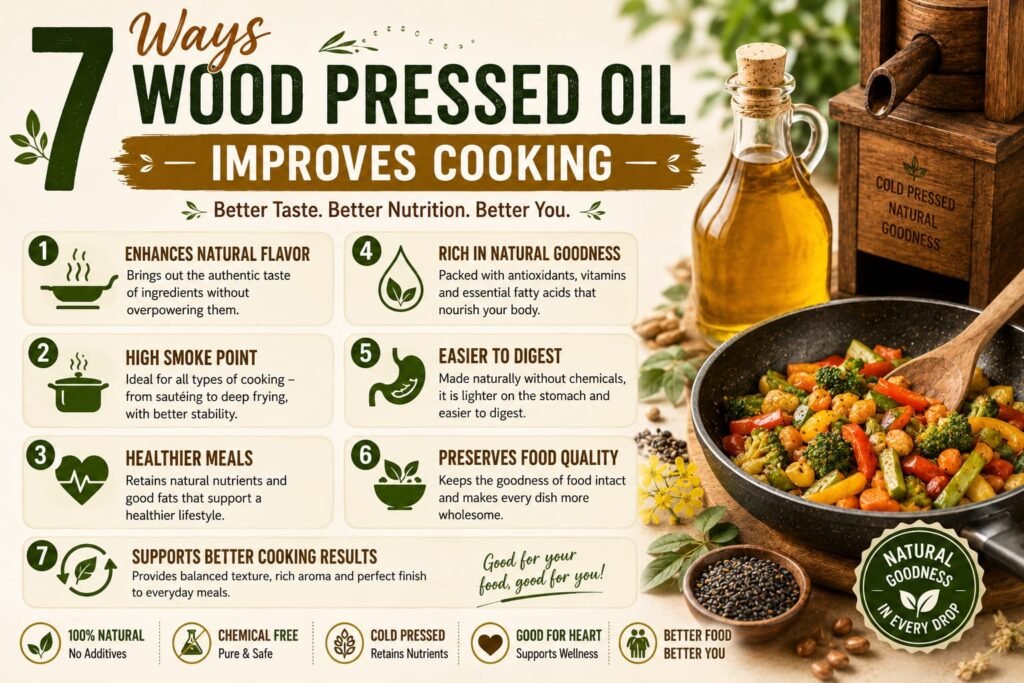
Traditional oil extraction methods are gaining attention again. Wood-pressed are popular among consumers who prefer traditional processing and characteristic natural flavours.
Common wood-pressed oil varieties include:
- Groundnut
- Sesame
- Coconut
The quality of an oil can depend on many factors, including:
- Quality of the raw material
- Processing method
- Freshness
- Packaging
- Storage conditions
Therefore, it is important to choose a reliable product and store it correctly.
Tips for Buying Quality Cooking Oil
Before purchasing, check:
- Manufacturing date
- Packaging quality
- Product labelling
- Storage instructions
- Food-quality compliance
- Freshness
Proper storage is also essential for maintaining quality.
Healthy Cooking Tips for Indian Families
Choosing the right oil is only one part of preparing healthy meals. Here are some useful tips.
1. Avoid Excessive Oil
Use only the quantity required for your recipe. Indian dishes can often be flavourful with moderate amounts of oil when prepared with fresh spices and ingredients.
2. Avoid Repeatedly Reusing
Repeated heating and reuse can affect the quality of cooking oil. It is best to avoid repeatedly reusing frying oil.
3. Do Not Overheat Oil
Excessive heating can affect flavour and quality. Use appropriate cooking temperatures.
4. Store Oil Properly
- In a tightly closed container
- Away from direct sunlight
- Away from excessive heat
- According to product storage instructions
5. Focus on Overall Food Quality
A healthy meal should include a variety of nutritious ingredients.
A balanced Indian meal may include:
- Dal or pulses
- Fresh vegetables
- Whole grains
- Appropriate protein sources
- Moderate amounts of cooking
Healthy Oils and Traditional Indian Dal Recipes
Dal is one of the most important foods in Indian cuisine. A simple tadka can transform cooked dal into a flavourful meal.
You can prepare delicious dal using ingredients such as:
- Cumin seeds
- Garlic
- Curry leaves
- Mustard seeds
- Hing
- Green chillies
- Turmeric
The choice of oil can influence the flavour.
For example, groundnut oil can complement traditional Maharashtrian dal recipes. Sesame oil can add a unique touch to selected South Indian preparations.
When combined with good-quality pulses such as unpolished toor dal, moong dal, chana dal, or urad dal, the right cooking oil can help create delicious home-cooked meals.
Frequently Asked Questions About Healthy Oils For Indian Cooking
Which oil is best for everyday Indian cooking?
There is no single cooking oil that is best for every person or every recipe. Groundnut, mustard, sesame, coconut, olive, sunflower, and rice bran oils can all have suitable uses depending on cooking style and individual dietary needs.
Can I use different oils for different recipes?
Yes. Using different oils for different types of dishes can add variety and help you match the flavour of the oil with the recipe.
Is wood-pressed oil suitable for cooking?
Wood-pressed oils are commonly used in traditional cooking and are valued for their characteristic flavour. Choose properly manufactured products and follow appropriate storage and cooking practices.
Should I reuse oil after deep frying?
Repeatedly reheating and reusing oil is best avoided because excessive heating can affect its quality.
How should cooking oil be stored?
Cooking should generally be stored in a tightly closed container away from direct sunlight, excessive heat, and moisture, according to the manufacturer’s instructions.
Conclusion
The Top 6 Healthy Oils For Indian Cooking offer a variety of flavours and cooking possibilities.
The seven oils discussed in this article are:
- Groundnut
- Mustard
- Sesame
- Coconut
- safflower
- Sunflower
Each oil has its own characteristics and can be suitable for different types of recipes.
Groundnut oil is versatile for many Indian dishes. Mustard oil offers a bold and traditional flavour. Sesame oil brings a distinctive nutty character, while coconut oil is especially useful for many South Indian recipes. can be used for light and modern cooking, while sunflower and are popular for their mild taste and versatility.
The best approach is to choose quality , use it in moderation, avoid excessive heating, store it correctly, and focus on an overall balanced diet.
By understanding the different Healthy Oils For Indian Cooking, you can make better choices for your kitchen and enjoy a variety of delicious Indian meals.